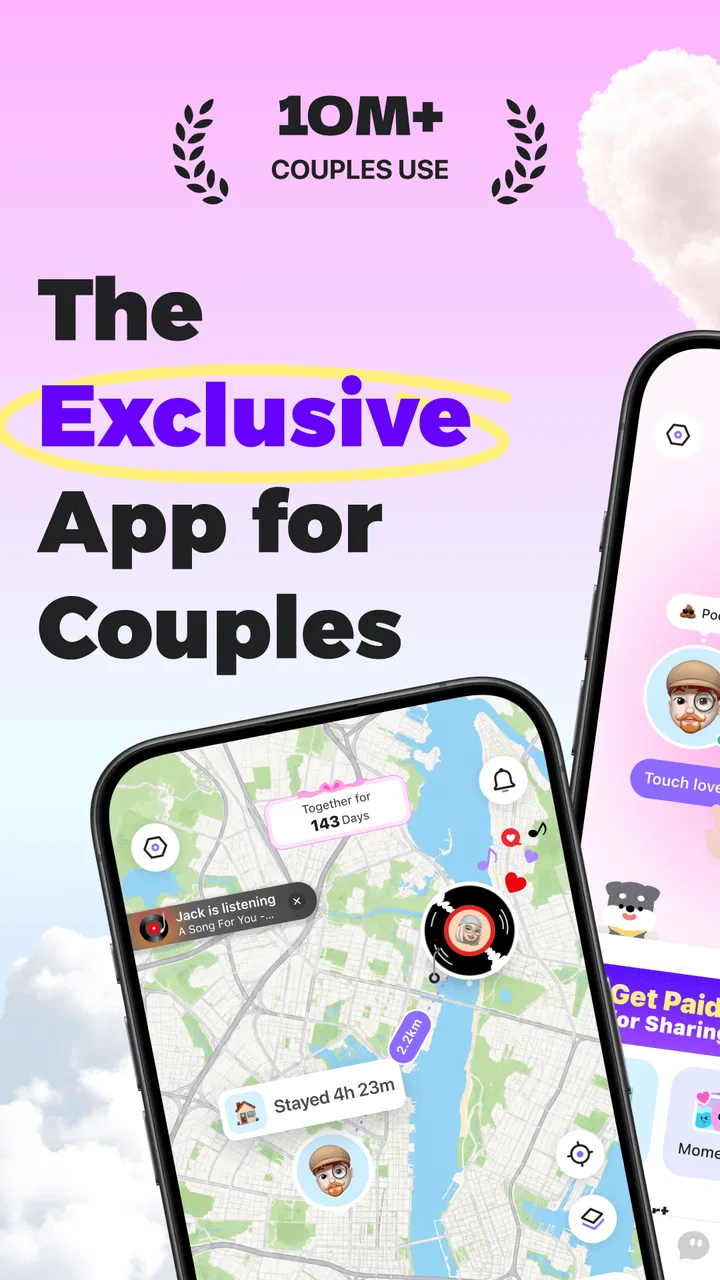
Love8 - App for Couples
- 4.6
- Rating
- 10.00M
- Installs
- Free
- Price

 Analysis by App-foxy
When a relationship is busy, staying emotionally present can become harder than staying in contact. Messages turn into logistics, plans get postponed, and small thoughts are left unsent. Love8 is a couples-focused tool from Love8 Team that aims to make closeness feel more intentional. I approached it less like another chat app and more like a shared space for two people who want a simple reason to check in.
That distinction matters. If you already communicate easily through ordinary messaging, Love8 will not magically solve every relationship problem. Its value is in giving your relationship a dedicated place and a gentle routine. The app is free to start, carries an Everyone age rating, and has reached over ten million installs with a 4.6 average from around forty-seven thousand ratings. Those figures suggest that its basic idea connects with a broad audience, but the real question is whether its style matches how you and your partner naturally interact.
What to expect before you begin
Love8 belongs to the tools category, but it does not feel like a conventional utility for files, settings, or productivity. Its purpose is personal: helping couples stay close through shared interaction. The short store label is simply “Love8,” while the broader promise is an app for couples to stay connected. I found that the best way to understand it is to treat it as a relationship habit rather than a replacement for conversation.
You May Also Like

 Blood Strike: 2.5 Anniversary
Blood Strike’s Loadouts Turn Every Drop Into a Tactical Gamble
A close look at Blood Strike’s custom loadouts: how fast access to signature weapons reshapes its battle royale rhythm, rewards preparation, and narrows the gap between fights.

 Pandora - Music & Podcasts
Pandora’s Music Is Easy to Start, but Harder to Recover
Pandora’s strength is its low-effort path from a seed to a station. Its weak spot is how much confidence it asks you to place in connection, setup, and quiet recovery.

 8 Ball Pool
 Is Built on Rivalries, Rematches, and Routine
A close look at the rivalries, rematches, shared routines, and unanswered safety questions that turn a quick pool match into a persistent mobile community.

 Samsung Music
’s Quiet Strength Is Playing What You Already Own
Its reach comes less from spectacle than from dependable access to a personal library. That simplicity is both the app’s strongest retention engine and its ceiling.

 AccuWeather: Weather Radar
AccuWeather Review: A Quick, Clear Forecast for Everyday Decisions
For everyday plans, the best forecast is the one you can understand quickly. AccuWeather makes rain timing, radar, and local conditions easy to act on, with a few trade-offs.

 Hill Climb Racing
Why Hill Climb Racing Still Turns Crashes Into One More Run
A tiny car, a bumpy hill and one more upgrade: Hill Climb Racing keeps resurfacing because its simple chaos makes every near-miss feel personal.
More From Our News Desk



The first-time experience is most rewarding when both people agree to use it. Installing it alone may let you look around, but the meaningful part comes when your partner joins the same shared experience. That makes the app a poor fit for someone seeking a private journal, a general social network, or a large community. It is designed around a couple, so its usefulness depends on mutual participation.
The current version is 3.10.1, and it runs on devices using Android 8.0 or later. The app is free, although optional in-app purchases range from $0.99 to $79.99 per item. I would not treat the free download as a promise that every element will remain available without cost. A sensible approach is to begin with the free experience, understand what you and your partner actually use, and only then decide whether an optional purchase adds enough value.
One thing I appreciated is that the concept does not require a dramatic romantic gesture. Love8 works better for ordinary moments: sending something thoughtful during a workday, creating a small shared routine, or opening the app when a conversation needs a warmer starting point. That makes it more approachable than relationship tools that expect long answers or constant emotional disclosure.
Who will get the most from it
I would recommend trying it if you and your partner live apart, have conflicting schedules, or often realize at night that the day passed without a real check-in. It can also suit couples who enjoy small digital rituals but want something more relationship-centered than a standard messaging thread. New couples may like having a low-pressure way to build a habit, while long-term couples can use it to interrupt repetitive daily routines.
The strongest use case is not a crisis. Love8 is better at supporting regular connection than repairing serious conflict. If you are looking for counseling, structured communication exercises, or professional guidance, a dedicated relationship resource is a better choice. Likewise, if either person dislikes couple-oriented apps or feels pressured by reminders to participate, the shared format may create friction rather than closeness.
Setting it up without making it feel like homework
For a first session, I suggest choosing a calm moment rather than installing it in the middle of an argument or while one person is rushing out the door. Start by agreeing on what you want from it. Maybe the goal is a daily check-in, a way to share affection while apart, or simply a private place for couple-related interaction. Defining that purpose prevents the app from becoming another notification competing for attention.
After installing Love8, move through the opening setup together if possible. Keep your expectations modest: the first success is not completing every available option, but getting both partners into the same experience and making one interaction that feels natural. If the app asks you to connect with your partner, use the exact account or invitation flow it presents rather than trying to improvise a workaround. Couple apps often depend on matching the right two people, and rushing this stage can cause avoidable confusion.
I also recommend agreeing on notification boundaries before using it regularly. Decide whether you want alerts during work, whether evenings are better, and what happens if one person misses a day. This is a small but important trade-off. A prompt can help a busy couple remember each other, but too many interruptions can make affection feel like an obligation. The healthiest routine is one that supports your relationship without turning participation into a test.
Because Love8 includes optional purchases, I would also make the first setup a no-pressure exploration. Do not assume that a locked or highlighted item must be purchased immediately. Spend time learning which parts of the experience genuinely help you connect. For some couples, a simple shared action will be enough; for others, an additional option may justify the cost. The right decision depends on repeated use, not on the excitement of the first screen.
Your first meaningful success
The first useful action should be deliberately small. Open the app with your partner and send or complete one interaction that communicates something specific, such as appreciation for something they did that day or a reminder about a plan you both care about. Avoid writing a generic “love you” only because the app is open. A concrete message has more emotional value and gives the app a fair test.
A realistic example would be a couple with different schedules. One person starts work early, while the other finishes late. Instead of expecting a long conversation, they use Love8 during a short break to leave a thoughtful check-in. The recipient can respond when available, and the interaction becomes a small bridge between two parts of the day. The benefit is not that the app replaces a call; it is that it helps the couple remember to create space for one.
Another useful workflow is to connect the app to an existing habit. You might open it after your morning coffee, before commuting, or while waiting for dinner. Linking it to something already established is more reliable than promising to use it “whenever you remember.” I found this especially helpful for couples who are affectionate but inconsistent with digital routines. The app becomes a cue rather than a separate task.
My non-obvious tip is to alternate who starts the interaction. If one partner always initiates, the routine can quietly become one-sided. Taking turns makes the activity feel shared and also reveals whether both people enjoy the format. A second tip is to use it when you have something small to say, not only when you have a major update. These brief moments are where a couples app can offer more value than a conventional chat thread, because they keep attention on the relationship itself.
Where first-time users may get confused
The biggest possible misunderstanding is expecting Love8 to behave like a full messaging service. Its identity is narrower and more relationship-focused. If you need group chats, work conversations, searchable archives, file sharing, or a broad contact list, your usual messenger will remain more practical. Love8 makes sense alongside those tools, not necessarily instead of them.
Another point of confusion is the difference between being connected and being emotionally engaged. Pairing with a partner does not automatically create meaningful closeness. You still need to choose sincere responses and respect each other’s pace. If one person treats every prompt as a duty, the app can feel mechanical. I would rather see a couple use it three times with genuine attention than open it every day while barely noticing what the other person shared.
Some users may also wonder whether the app is suitable for every relationship stage. It can be useful early in a relationship, but the tone may not suit someone who wants a completely neutral productivity tool. It can support long-distance couples, yet it cannot remove the practical difficulty of time zones, travel, or limited availability. It can encourage communication during a rough patch, but it should not be used to avoid a necessary face-to-face discussion.
There is also a financial question. Since the app is free with optional purchases, you can evaluate the basic experience before spending anything. However, the listed purchase range extends from $0.99 to $79.99 per item, so I would pay attention before confirming a transaction. Discuss purchases with your partner, especially if both people use different app-store accounts or have different expectations about what should be shared. A couples tool should not introduce an unexpected money argument.
Privacy and comfort deserve a practical conversation too. Before entering anything deeply personal, decide what you are comfortable keeping inside a shared digital space. Do not use the app as a place to record information that could harm either person if seen out of context. This is not a criticism unique to Love8; it is simply good judgment for any relationship app. Emotional openness works best when both partners understand the boundaries.
How it compares with ordinary alternatives
A normal messenger is more flexible and usually better for fast back-and-forth conversation. It handles family groups, photos, planning, and everyday logistics without asking you to adopt a separate habit. If your only need is to send affectionate messages, your existing chat app may be enough. Love8 earns its place when you want the relationship to have a dedicated context instead of being mixed with work, friends, shopping, and notifications from everyone else.
A shared calendar is stronger for appointments and practical coordination. It can tell you when an event is happening, but it does not necessarily encourage warmth or appreciation. A private notes app is better for storing lists, plans, or longer reflections, yet it lacks the couple-centered purpose that makes Love8 feel more personal. Social networks offer many ways to interact, but their public and distracting nature can work against the quiet sense of “this is ours.”
Compared with relationship counseling apps, Love8 appears more approachable for everyday closeness and less suited to guided problem-solving. That is not a weakness if you want a lightweight routine, but it is important not to confuse emotional prompts with therapy. For serious communication difficulties, choose a resource built for structured support and use this app only as a supplement if both people find it comfortable.
The trade-off is therefore clear: Love8 gives up the broad usefulness of general tools in exchange for a more focused couple experience. I think that focus is its main strength. It is also the reason some people will uninstall it quickly. If the dedicated format feels artificial to you, no amount of setup will make it better than a heartfelt message in the app you already use.
Building a routine that stays enjoyable
Once the first interaction works, resist the urge to turn Love8 into a scoreboard. Missing a day should not become evidence that someone cares less. Instead, use it as an invitation to reconnect when it fits. Couples with demanding schedules may prefer a few intentional check-ins each week, while couples who enjoy daily rituals may open it more often. The correct rhythm is the one that leaves both people feeling closer rather than monitored.
One advanced habit is to reserve the app for content that benefits from being couple-specific. Do not duplicate every practical message from your regular chat. Use Love8 for appreciation, encouragement, playful connection, or a small question that invites a personal answer. Keeping its purpose distinct makes the experience easier to recognize and prevents it from becoming another inbox.
You can also review the routine after a week or two. Ask each other which interactions felt natural, which felt forced, and whether the app helped you notice each other during busy days. This conversation is more valuable than blindly continuing. If the only result is extra notifications, reduce the frequency. If it helps you start conversations that would otherwise disappear, keep it and build around that strength.
For couples who live together, the app may seem less necessary because you see each other often. I still think it can help when work, childcare, or separate interests fill the day, but it should not replace a real conversation across the room. Use it as a spark, then put the phone down. The strongest outcome is often what happens after the digital interaction, not the interaction itself.
For couples living apart, the dedicated space can be more valuable. Distance makes small updates feel significant, and a shared routine can reduce the sense that communication happens only when there is news. Even then, combine it with calls or longer conversations when possible. Love8 is best viewed as a thread that keeps connection alive between those bigger moments.
My recommendation after using it
Love8 is a focused, approachable tool for couples who want help turning affection into a regular habit. I like its narrow purpose because it avoids competing directly with every messenger or planning app on a phone. The developer, Love8 Team, has positioned it around closeness rather than general communication, and that makes the experience easiest to judge: does it help you and your partner pay attention to each other?
My recommendation is to install it and test one sincere interaction together before making any purchase or commitment. If that small action feels warm and natural, connect it to an existing daily habit and agree on comfortable notification boundaries. If it feels like homework, do not force it. A relationship tool should make connection easier, not create another obligation.
The app is a particularly good choice for busy or long-distance couples who want a dedicated space for small moments. It is less suitable for people seeking therapy, a complete communication platform, or a private solo journal. The free starting point makes experimentation straightforward, while the optional purchases mean you should review costs carefully before unlocking anything.
After reaching over ten million installs and maintaining a 4.6 average across around forty-seven thousand ratings, Love8 clearly has broad appeal. My own view is more specific: its real success comes from helping two people create a repeatable moment of attention. It will not replace honesty, time together, or difficult conversations. But if you and your partner want a gentle prompt to stay emotionally present, it is worth trying.
FAQs for Love8 - App for Couples
01What is Love8, and who is the app designed for?
Love8 is a relationship-focused app designed to help couples communicate, spend intentional time together, and strengthen their emotional connection. It can be useful for new partners, long-term couples, and people in long-distance relationships who want shared activities, conversation prompts, reminders, or relationship-oriented features in one place. Its usefulness depends on whether both partners are willing to participate regularly.
02What features does Love8 offer for couples?
Love8 generally focuses on couple-oriented interaction rather than traditional social networking. Depending on the version available on your device, you may find tools such as daily questions, shared activities, relationship prompts, private conversations, reminders, or ways to record meaningful moments together. Before downloading, check the current store description because features, design, and included tools can change with updates or regional availability.
03Is Love8 free to download and use?
Love8 may be available to download at no initial cost, but some features can require in-app purchases, a subscription, or an upgraded account. Users should review the pricing page and App Store or Google Play listing carefully before starting a trial. Also check renewal terms, since subscriptions can renew automatically unless canceled through the relevant Apple or Google account settings.
04Does Love8 protect our private relationship information?
Because Love8 is intended for couples, privacy is an important consideration before entering personal messages, photos, answers, or relationship details. Review the app’s privacy policy, requested permissions, data-sharing practices, encryption information, and account-deletion procedure. Avoid assuming that every feature is completely private simply because the app is couple-focused, and use strong, unique passwords for both accounts.
05Can Love8 be used by long-distance couples, and do both partners need the app?
Love8 can be particularly helpful for couples who live apart because shared prompts, activities, and regular check-ins can create a sense of routine and closeness across distance. Some functions may work with one person, while connected or synchronized features may require both partners to install the app and link their accounts. Confirm compatibility, invitation requirements, and supported devices before relying on it.
Pros
- Private space for sharing photos
- notes
- and memories as a couple.
- Relationship prompts can encourage meaningful conversations.
- Simple interface is easy for both partners to use.
- Useful reminders help couples celebrate important dates.
- Shared activities can make everyday communication more engaging.
Cons
- Both partners may need the app for its shared features to work fully.
- Some features may feel repetitive after regular
- long-term use.
- Couples wanting advanced planning tools may find it limited.
- Frequent notifications could become distracting for some users.
- Privacy depends on both partners protecting their account access.

Love8 - App for Couples
Gallery